3 AI Drug Discovery Certifications For Biotechnology Student

Career Advice 2026
3 FREE Certifications Every Biotechnology Student Should Explore to Enter AI Drug Discovery
Finding a new drug molecule used to take a decade of trial and error in a wet lab. Today, artificial intelligence models can predict molecular binding, toxicity, and folding in a matter of hours.
The biggest pharmaceutical companies in the world are no longer just competing on biology. They are competing on computational power and proprietary algorithms.
When you look at the current innovation landscape, the technology competition is intense. The focus of recently published patent applications has shifted dramatically. Companies are not just protecting the final chemical compound anymore. They are rushing to protect the specific machine-learning architectures, training datasets, and unique neural networks that generated those compounds. It is a massive global race for digital innovation.
During my profile review sessions, I see many bioinformatics students list AI and Machine Learning as core skills. But when I ask how they would prevent an algorithm from overfitting a small molecular dataset, the conversation usually stops. They understand the coding basics, but they completely miss how these models actually integrate into commercial pharmaceutical pipelines.
If you want an industry-ready profile, you need to understand both the molecule and the code. Students who understand where commercial innovation is happening today are the exact professionals who will shape the healthcare technologies of tomorrow.
To help you bridge that gap and give you the digital proof you need, here are 3 training paths from top institutions. I have also included a specific portfolio project for each one to help you build verifiable digital proof.
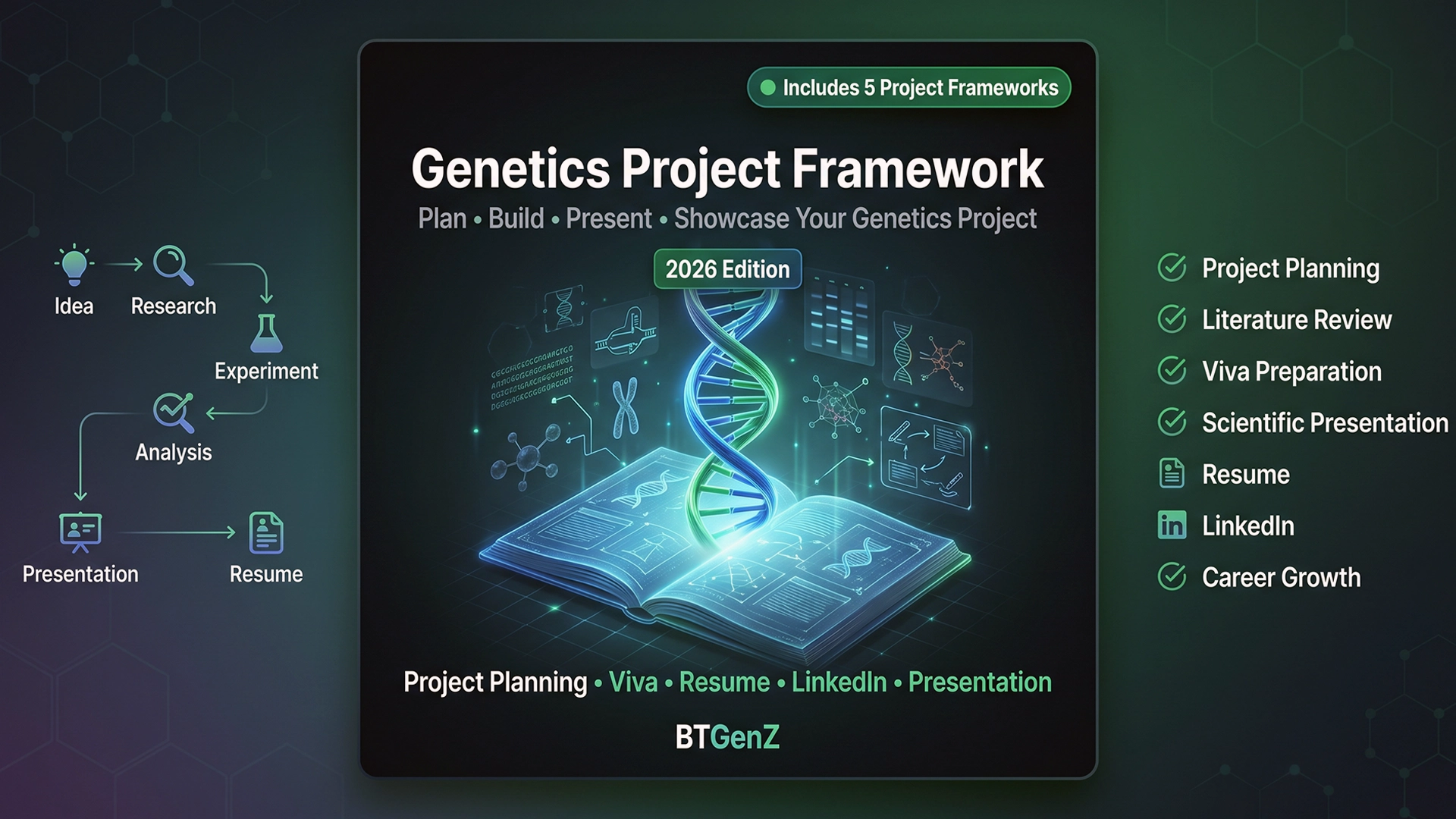
Build Your Genetics Project With Confidence.
Stop struggling with documentation and planning. Get the structured 2026 framework to plan, execute, and present your genetics project like a professional.
1. AI in Healthcare (Stanford University)
What it is: This provides a massive foundation in how machine learning is actively disrupting medicine, clinical research, and commercial healthcare pipelines.
Beginner Project Idea (The AI Implementation Map): Open Draw.io and create a visual flowchart showing where artificial intelligence accelerates the traditional drug approval timeline. Export this strictly as a crisp 16:9 aspect ratio image and share it on LinkedIn to show recruiters you understand commercial technology integration.
Get the "Python for Bioinfo Guide" Absolutely Free included with your order today!

Stop Guessing. Get Job-Ready in 90 Days.
Tired of random tutorials and useless certificates? Get the exact step-by-step framework to master the tools employers actually want in the correct order.
2. Machine Learning with Python (IBM)
What it is: You cannot enter computational biology without knowing how to build, train, and validate the actual data models that predict molecular behavior.
Beginner Project Idea (The Algorithm Accuracy Graph): Take a public dataset from Kaggle related to chemical properties. Run a simple regression model in Python and generate a clean data visualization showing your prediction accuracy. Take a high-quality 16:9 screenshot of your graph and document your training process in a GitHub README.

Bioinformatics Project Guide
Stop wondering what to build. Get 5 resume-ready bioinformatics projects with curated datasets, recommended tools, GitHub structure, and clear implementation workflows.
Get the "Python for Bioinfo Guide" Absolutely Free included with your order today!
3. Drug Discovery (UC San Diego)
What it is: This connects your computational skills back to the real-world commercial pipeline of how a targeted drug actually gets discovered, approved, and manufactured.
Beginner Project Idea (The Patent Strategy Slide): Design a single, professional presentation slide in a 16:9 layout. Summarize how a modern pharmaceutical company might protect their AI discovery platform using software patents versus molecular patents. This shows absolute commercial maturity.
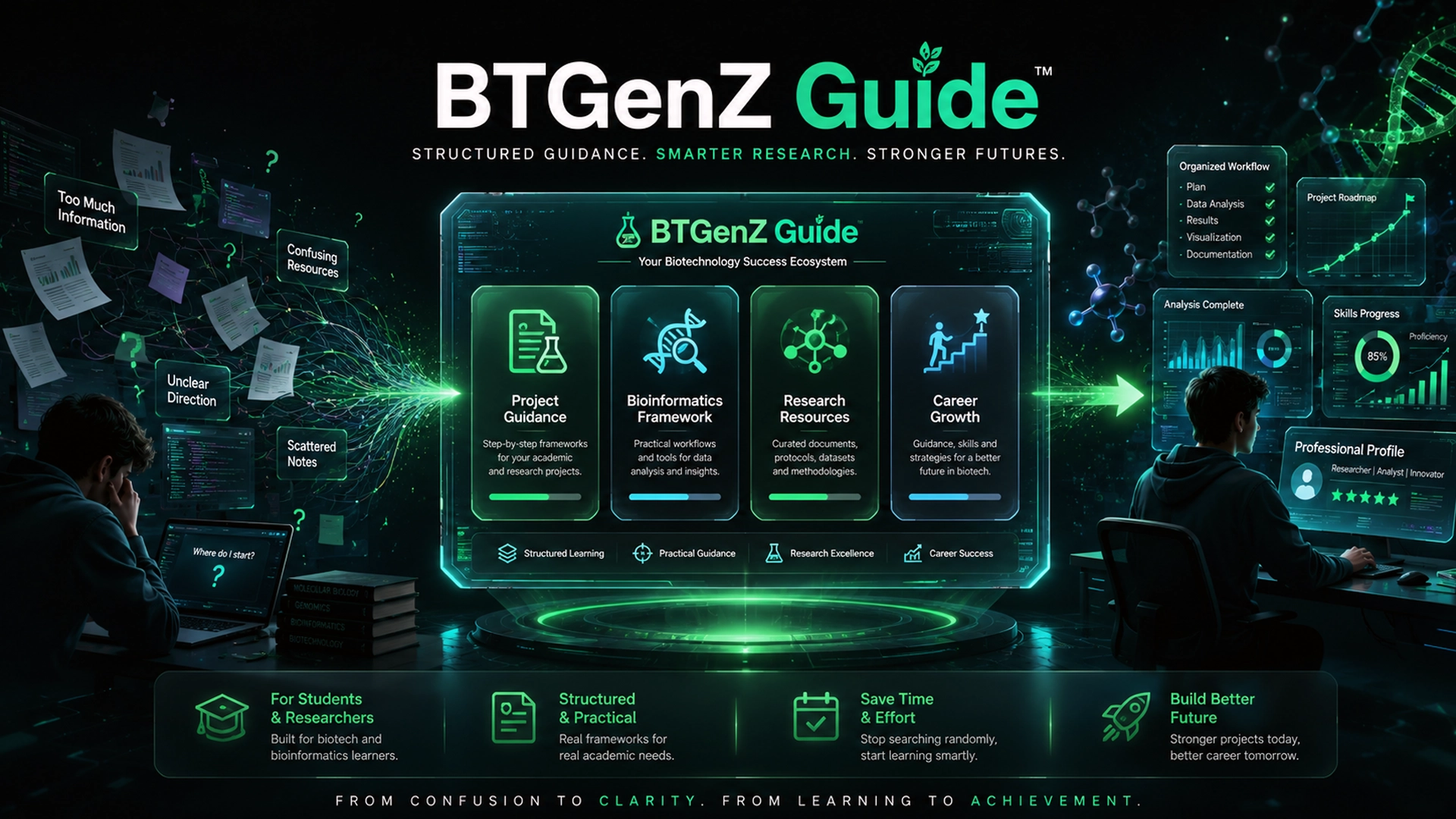
Find Your Next Step in Bioinformatics.
Confused about where to start or what to learn next? Browse our curated collection of guides, roadmaps, and tools designed to take you from beginner to job-ready.
The 10 Question AI Drug Discovery Reality Check
When we evaluate resumes at BTGenZ, the students who have verifiable training in machine learning workflows immediately bypass the massive pile of generic applications. But once you sit down with a hiring manager, they will test if you actually ran the pipelines. Figure out the answers to these trap questions before your interview:
- AI Architectures: What is the fundamental computational difference between a generative AI model and a predictive AI model when designing new therapeutic molecules?
- Data Processing: When training a neural network on chemical structures, why is data curation usually the most time-consuming step for a computational biologist?
- Predictive Toxicology: How can deep learning algorithms predict off target toxicity before a drug ever enters in vitro preclinical trials?
- Chemical Encoding: What are SMILES strings, and how do machine learning models actually process them to read and understand chemical structures?
- Patent Strategy: In the context of technology intelligence, why would a massive pharmaceutical company file a patent for a specific machine learning architecture rather than just the final targeted molecule?
- Statistical Rigor: How do researchers avoid overfitting when they are forced to train a predictive model on a very small dataset of known drug compounds?
- Workflow Integration: What is the precise role of traditional molecular docking simulations when they are combined with modern AI-driven target identification pipelines?
- Structure Prediction: Why is AI-driven protein folding prediction considered such a massive commercial breakthrough for structure-based drug design?
- Commercial Logistics: A lab manager says: "Our algorithm predicts a brilliant binding affinity, but it completely ignores synthetic accessibility." How would you adjust the computational model to solve this bottleneck?
- Feedback Loops: How do companies integrate real-world clinical trial failure data back into their computational models to improve future predictive accuracy?
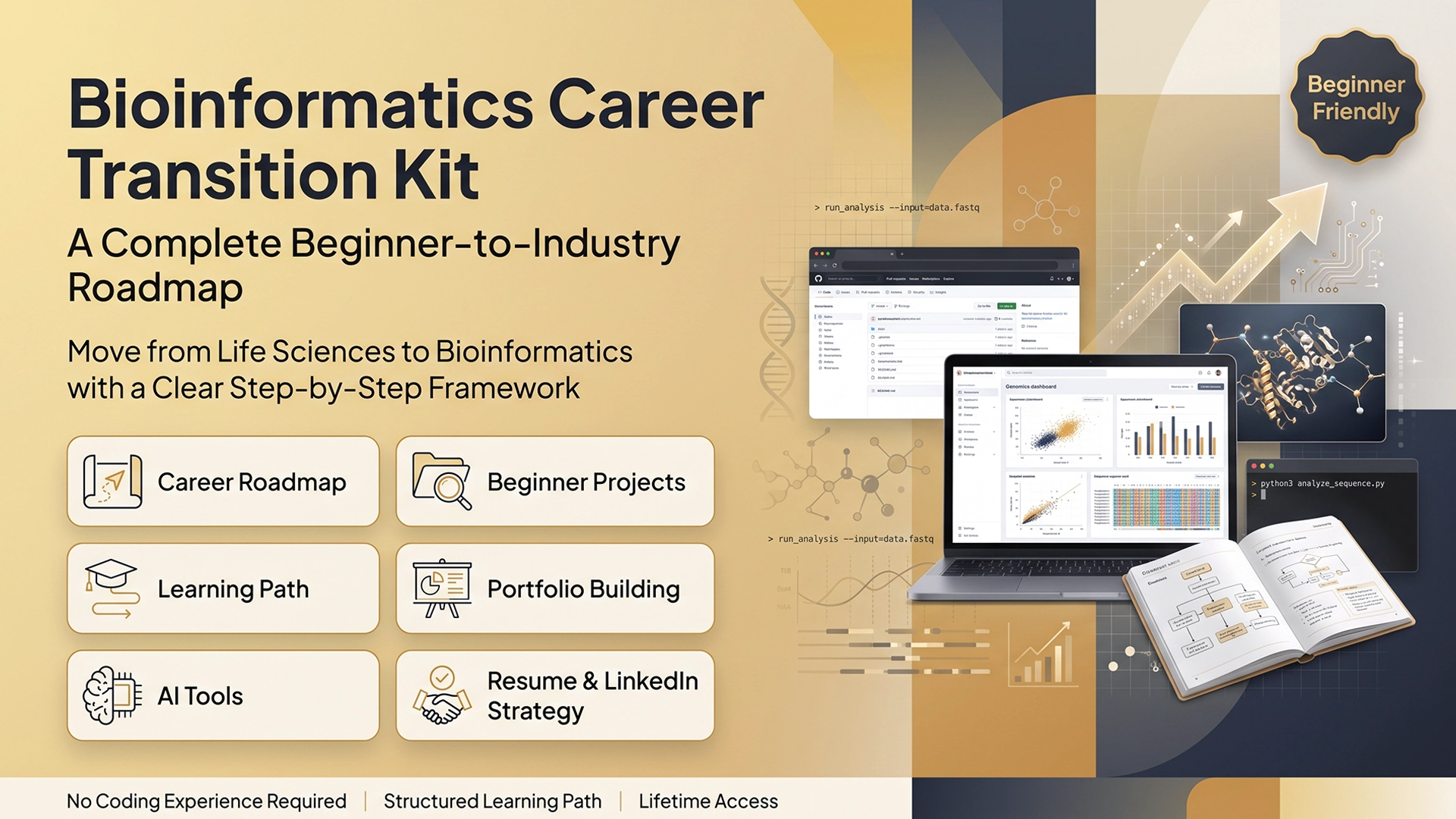
Skip the Confusion. Start Your Journey the Right Way.
Don't waste weeks on trial and error. Get the exact step-by-step guide to mastering the right tools and moving from total beginner to confident learner.
Get the "Python for Bioinfo Guide" Absolutely Free included with your order!
Your Technical Skills Deserve to be Seen
I know exactly how frustrating it is to spend months mastering new coding languages and complex data pipelines, only to send out dozens of applications and hear absolutely nothing back. The reality is that just listing tools like Python or R on a generic text resume no longer works. Recruiters are overwhelmed. If your technical depth is buried under basic formatting, you remain completely invisible.
You have to show them what you can do. Building a clean visual project or documenting a functional script online proves to a hiring manager that you can actually execute the work. If you need help figuring out exactly what steps to take next, I highly recommend downloading the Bioinformatics Roadmap & Guides over at guide.btgenz.in. It is available and gives you a clear direction to start building your visibility.
However, some of you might be tired of guessing and want expert help turning your academic background into a selection-ready profile. We can absolutely work together directly to make that happen. Because rewriting your career narrative and building a custom digital portfolio requires hours of dedicated one-on-one strategy, this is a paid career positioning service. It is built specifically for students and researchers who value their time, want to skip the trial and error, and are ready to invest in their next big career leap.
If you are ready to let us do the heavy lifting with you and build a standout profile that attracts real industry opportunities, you can book your repositioning service directly at portfolio.btgenz.in. You can also drop an email to connect@btgenz.in if you want to chat about your specific situation before making a decision.
Do not let your hard work stay hidden. Start building your proof today.
Stay curious,
Looking for more resources? If you want to download project-related guidance, Click here to download.

Recruiters Decide Faster Than You Think.
Your resume, LinkedIn profile, projects, and certifications may be stronger than you realize. The real question is whether they are communicating the right message.
Questions? Reach us directly at connect@btgenz.in
Researchers Read:
Founder of BTGenZ. Passionate about simplifying biotechnology for the next generation and bridging the information gap for aspiring biotechnologists in India.

Related Reads
Loading commenting section...
Comments Section
No approved comments yet. Be the first to leave a comment!