Free Hands On Bioinformatics Course for Students Exploring Restriction Mapping
Career Advice 2026
Restriction enzymes are blind chemical scissors. If you do not map your cut sites computationally, you will destroy your target gene.
Understand why you must computationally map your cut sites before a blind chemical enzyme destroys your entire genetic engineering experiment.
When life science students study recombinant DNA, they often draw restriction enzyme cut sites on a piece of paper. But in the biotechnology industry, if you try to design a cloning experiment without computational restriction mapping, you will destroy your target gene.
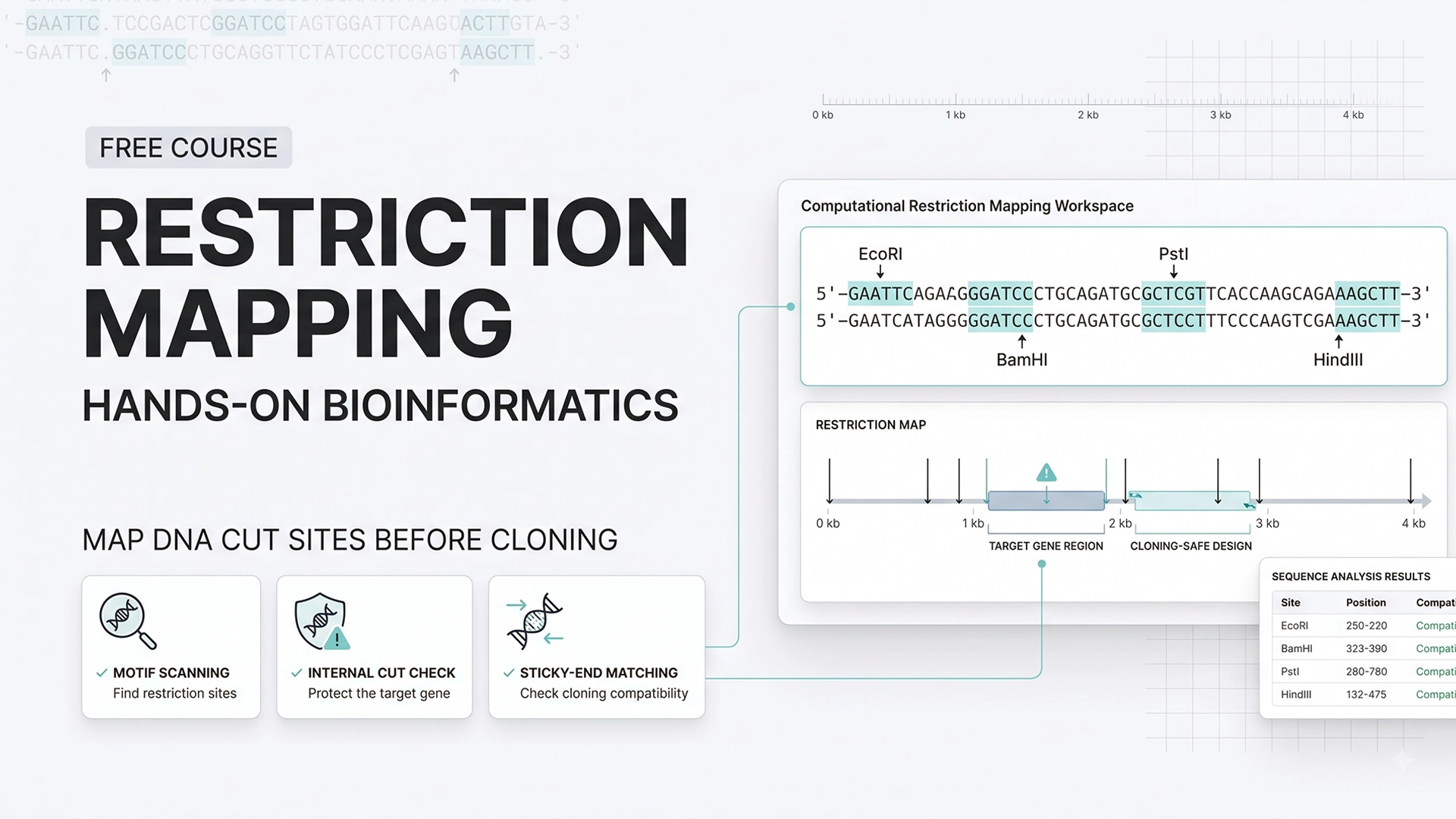
Restriction enzymes are completely blind chemical scissors. They do not know what your target gene is, and they do not care about your biological goals. They only recognize specific palindromic sequences of DNA. If that specific nucleotide sequence accidentally appears inside the middle of your target gene, the enzyme will chop your genetic insert in half before you can even clone it. Generating successful genetic constructs requires strict computational mapping before you ever touch a pipette.
To prevent biological failure in the laboratory, you must master the computational analysis behind restriction mapping.
Palindromic Motif Scanning
You must use bioinformatics algorithms to computationally scan your entire genetic sequence. The software identifies every possible reverse palindrome, mathematically mapping exactly where a restriction enzyme will bind and cut. Finding these hidden motifs by eye is completely impossible when dealing with sequences that are thousands of nucleotides long.
Internal Cleavage Avoidance
You must digitally verify that the restriction enzymes you plan to use on your plasmid vector do not accidentally exist inside your inserted gene. This is the most common failure point in early genetic engineering. If your software flags an internal cut site, you must computationally redesign your strategy. You can either select a completely different enzyme, or you can use computational mutagenesis to design a silent mutation that destroys the internal cut site without altering the final translated protein.

Bioinformatics Project Guide
Stop wondering what to build. Get 5 resume-ready bioinformatics projects with curated datasets, recommended tools, GitHub structure, and clear implementation workflows.
Sticky End Compatibility
Finally, you must digitally assemble the sequence to prove that the sticky ends generated by your restriction enzymes on the insert will perfectly align and ligate with the sticky ends on the commercial plasmid vector. If the nucleotide overhangs are not completely complementary, the DNA ligase will fail to seal the plasmid.
A Free Resource to Build Your Foundation
If you are evaluating introductory options to help you learn how computational algorithms scan genomes for these exact palindromic sequences, here is a highly recommended structured resource:
Biology Meets Programming Bioinformatics for Beginners - UC San Diego
What this course is: A focused technical introduction to the computational algorithms used to scan DNA sequences and identify biological motifs.
How it helps you: This course teaches you the algorithmic logic behind sequence scanning. It focuses heavily on how computational tools identify specific motifs and reverse palindromes within a massive DNA string, which is the absolute computational engine behind all modern restriction mapping software.
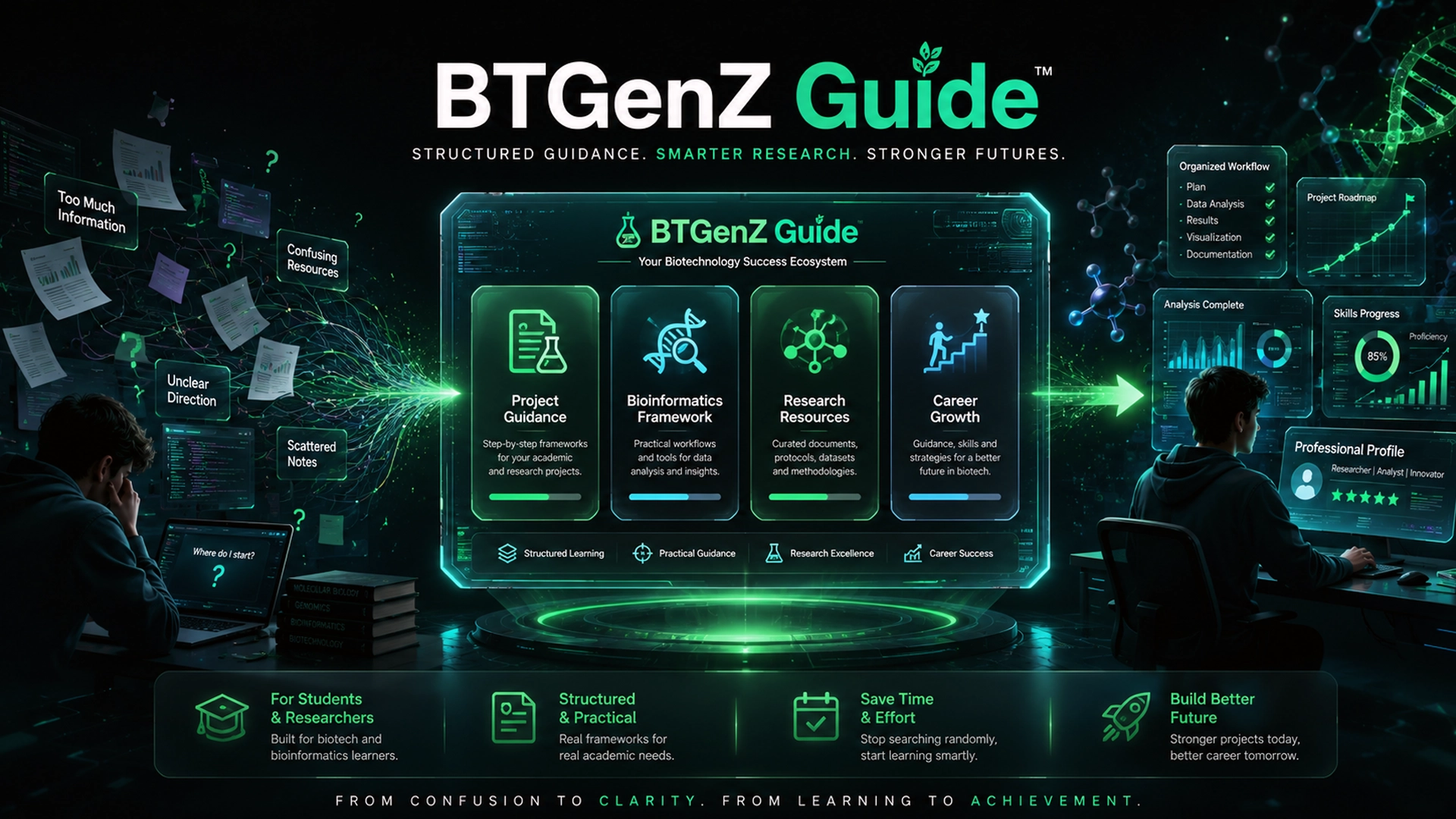
Find Your Next Step in Bioinformatics.
Confused about where to start or what to learn next? Browse our curated collection of guides, roadmaps, and tools designed to take you from beginner to job-ready.
I’m Sujay Mukherjee, Founder of BTGenZ, where I work at the intersection of biotechnology, scientific communication, research data, and industry. Alongside building BTGenZ, I personally help researchers turn complex research into clear data visualizations, research reports, scientific presentations, and technical content, making their work easier to understand, communicate, and present professionally.
The 10 Question Restriction Mapping Reality Check
When we evaluate resumes at BTGenZ, the candidates who have verifiable training in advanced computational tools immediately bypass the generic applications. But once you sit down with a hiring manager, they will test if you actually understand the science. Figure out the answers to these trap questions before your interview:
- What is the fundamental computational definition of a reverse palindrome when scanning a double stranded DNA sequence?
- Explain how a bioinformatics software tool visually flags a restriction site that will generate a five prime overhang versus a blunt end.
- Why is it computationally critical to avoid selecting restriction enzymes that are sensitive to biological DNA methylation?
- How do you computationally design a silent mutation to safely remove an unwanted internal restriction site without changing the resulting amino acid?
- What is the exact mathematical function of a multiple cloning site within a commercial expression vector?
- Explain why using two completely different restriction enzymes for directional cloning is computationally superior to using a single restriction enzyme.
- How does a restriction mapping algorithm mathematically calculate the exact size of the resulting DNA fragments for agarose gel electrophoresis verification?
- When engineering a fusion protein, how does the software prevent a frameshift mutation at the exact restriction enzyme ligation site?
- Why must researchers computationally verify that their restriction enzyme choice works perfectly in the same chemical buffer during a double digest experiment?
- A lab manager notes that your cloned insert is constantly ligating backward into the vector. How does computational directional cloning solve this physical laboratory failure?

Recruiters Decide Faster Than You Think.
Your resume, LinkedIn profile, projects, and certifications may be stronger than you realize. The real question is whether they are communicating the right message.
Questions? Reach us directly at connect@btgenz.in
An Important Note on Resource Access and Credentials
This course offers free audit access via Coursera, allowing you to review the video lectures and study materials without cost. Official graded certificates and graded exams require payment or financial aid applications depending on platform policies.
From a profile positioning perspective, completing an online course serves as a helpful career exploration tool. However, industry recruiters evaluate candidates based on practical project visibility and demonstrated skills rather than course completion credentials alone.
Your Next Steps in the BTGenZ Ecosystem
This course can help you build the right foundational skills, but knowing what to learn is just the first step. At BTGenZ, we help you choose relevant skills and courses, then position them through your resume, LinkedIn, and portfolio so you can present yourself better for the roles you want.
If you decide to pursue this path and want to ensure your professional profile effectively communicates your new knowledge to industry recruiters, explore our profile positioning support directly at portfolio.btgenz.in.
Looking for more resources? If you want to download project-related guidance, Click here to download.
Researchers Read:
Founder of BTGenZ. Passionate about simplifying biotechnology for the next generation and bridging the information gap for aspiring biotechnologists in India.

Related Reads
Loading commenting section...
Comments Section
No approved comments yet. Be the first to leave a comment!