5 Certifications for Industrial Biotechnology Students

Career Advice 2026
5 Biotechnology Certifications for Students Exploring Industrial Biotechnology
I was recently talking to a microbiology student who wanted to break into industrial biotechnology. They spent two years in an academic lab growing bacterial cultures in small glass flasks. They understood microbial growth phases perfectly. They knew how to extract enzymes.
But they were getting rejected from every biomanufacturing and industrial fermentation role they applied for.
When I looked at their resume, the problem was obvious. They positioned themselves as an academic bench scientist. In industrial biotechnology, companies are not just looking for someone who can grow cells. They need researchers who understand how to take that small flask and scale it up to a massive commercial bioreactor. They need people who understand mass balances, downstream processing, and how to optimize microbial cell factories for commercial manufacturing.
The problem is not your knowledge. The problem is your positioning.
When we review profiles at BTGenZ, we constantly see brilliant students burying their potential under generic, text-heavy resumes that completely fail to tell their scientific story. To help you bridge that gap and give you the exact digital proof you need to optimize your profile today, here are 5 highly rated courses from top institutions. I have also included a specific portfolio project for each one to help you build verifiable digital proof.
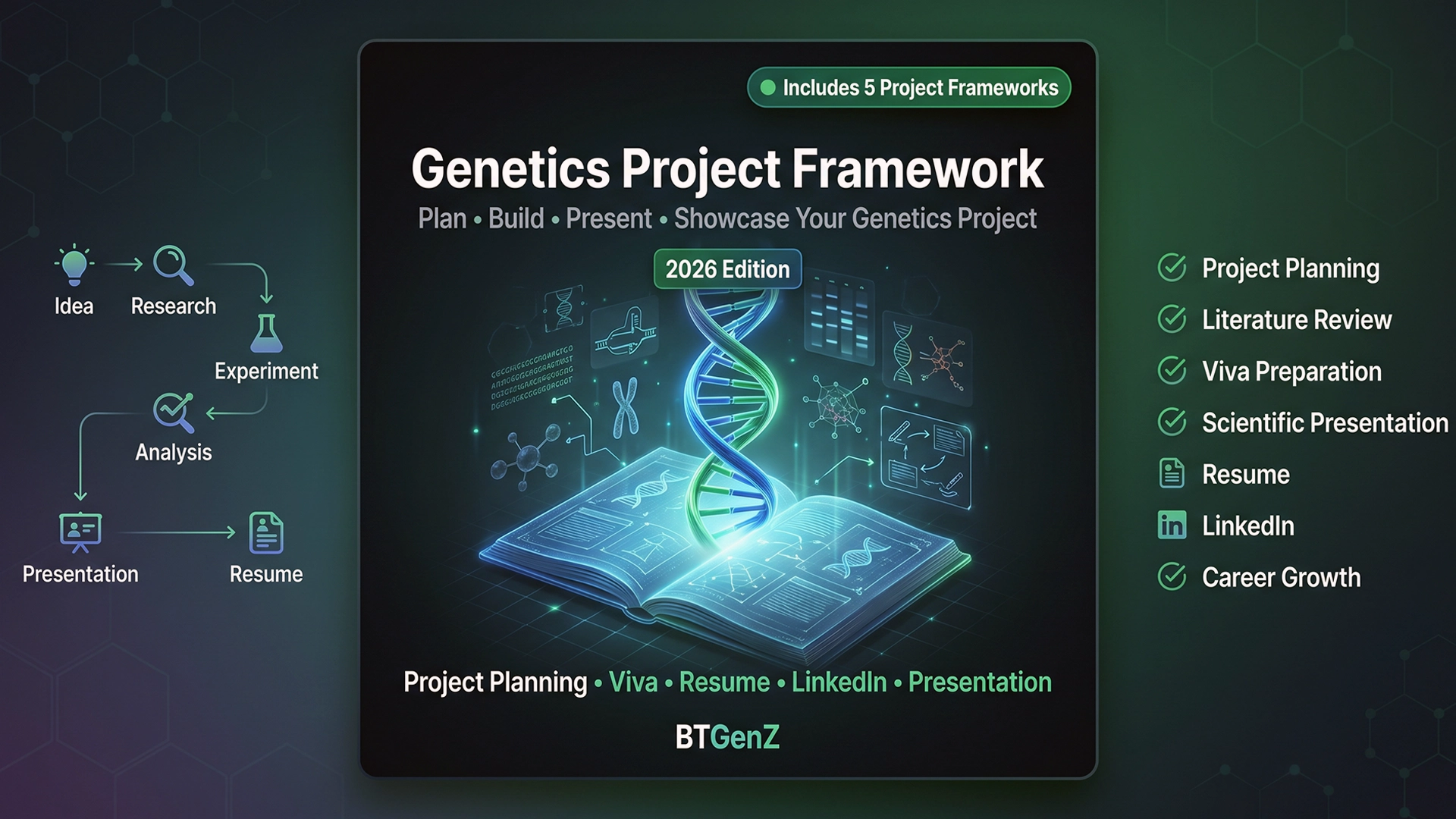
Build Your Genetics Project With Confidence.
Stop struggling with documentation and planning. Get the structured 2026 framework to plan, execute, and present your genetics project like a professional.
1. Industrial Biotechnology (University of Manchester)
What it is: This is the ultimate foundation. You learn how enzyme engineering and biochemical processing are applied directly to sustainable manufacturing and commercial-scale biology.
Beginner Project Idea (The Sustainable Manufacturing Matrix): Create a clean 16:9 PDF mapping three common bio-based products to the specific enzymes used in their commercial production. Export this strictly as a visual for your digital portfolio to prove you understand commercial applications.
Get the "Python for Bioinfo Guide" Absolutely Free included with your order today!

Stop Guessing. Get Job-Ready in 90 Days.
Tired of random tutorials and useless certificates? Get the exact step-by-step framework to master the tools employers actually want in the correct order.
2. Introduction to Industrial Bioprocess Development (Technical University of Denmark)
What it is: This course teaches you exactly what happens inside a commercial facility. You learn the engineering principles behind upstream fermentation and downstream processing.
Beginner Project Idea (The Bioreactor Flowchart): Open Draw.io and map out a standard upstream and downstream biomanufacturing pipeline. Detail the sterilization and recovery steps. Export it as a clean 16:9 visual to share on LinkedIn.

Bioinformatics Project Guide
Stop wondering what to build. Get 5 resume-ready bioinformatics projects with curated datasets, recommended tools, GitHub structure, and clear implementation workflows.
Get the "Python for Bioinfo Guide" Absolutely Free included with your order today!
3. Industrial Biomanufacturing: From Cells to Products (Technical University of Denmark)
What it is: Instead of just looking at biology, this teaches you how to optimize microbial cell factories specifically for commercial production and circular economy sustainability.
Beginner Project Idea (The Cell Factory Explainer): Write a 500-word article on LinkedIn explaining how microbial cell factories are optimized for yield. Include a 16:9 graphic highlighting the metabolic pathways engineered for production.
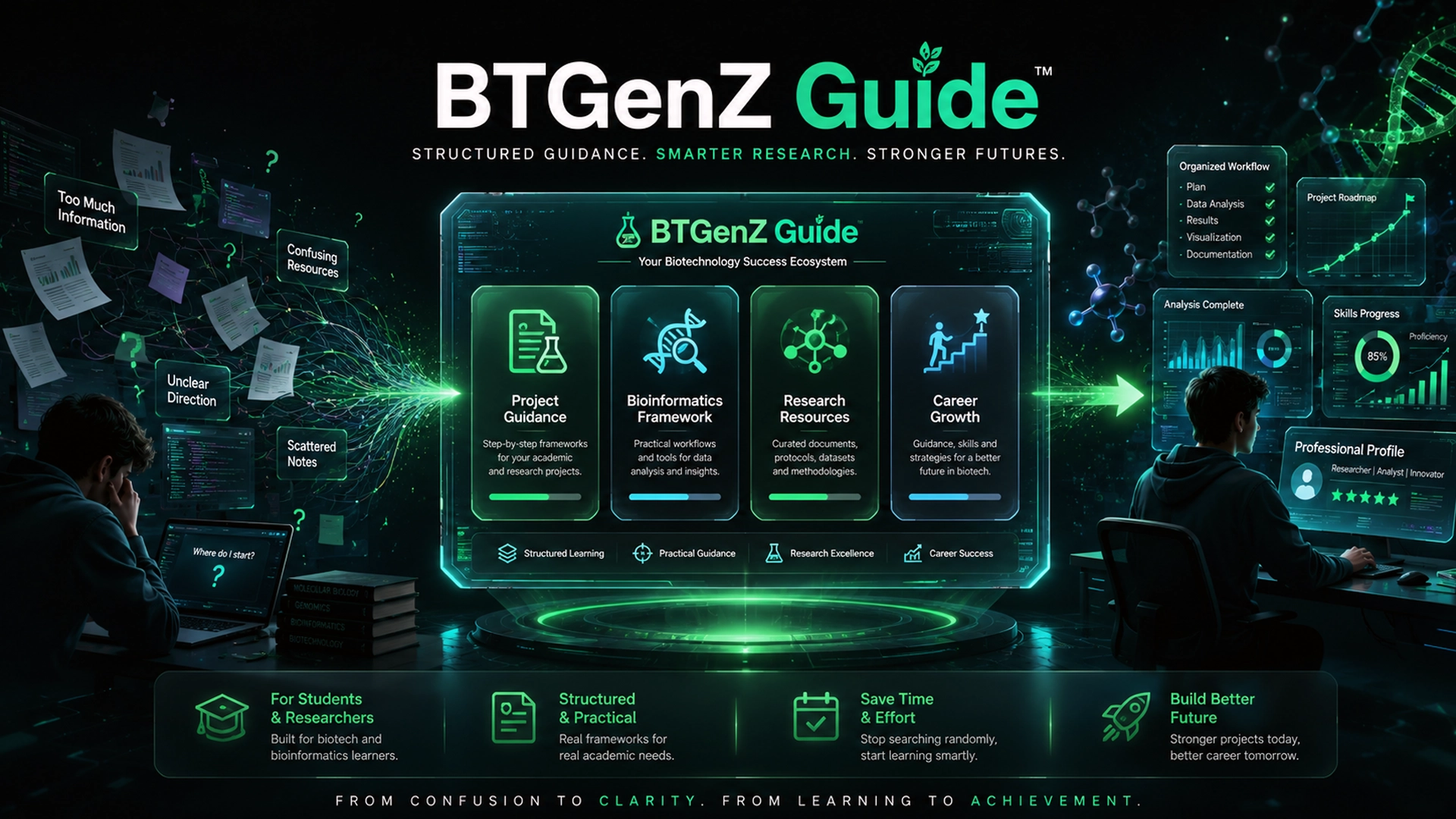
Find Your Next Step in Bioinformatics.
Confused about where to start or what to learn next? Browse our curated collection of guides, roadmaps, and tools designed to take you from beginner to job-ready.
4. New Fermentation Markets and How They Scale (University of Illinois Urbana-Champaign)
What it is: Precision fermentation is completely changing global supply chains. This teaches you how to analyze market trends and evaluate the real engineering challenges of scaling up production.
Beginner Project Idea (The Precision Fermentation Market Map): Create a 16:9 visual highlighting three companies leading the precision fermentation space and the specific alternative proteins they produce. This proves to recruiters that you follow industry trends.
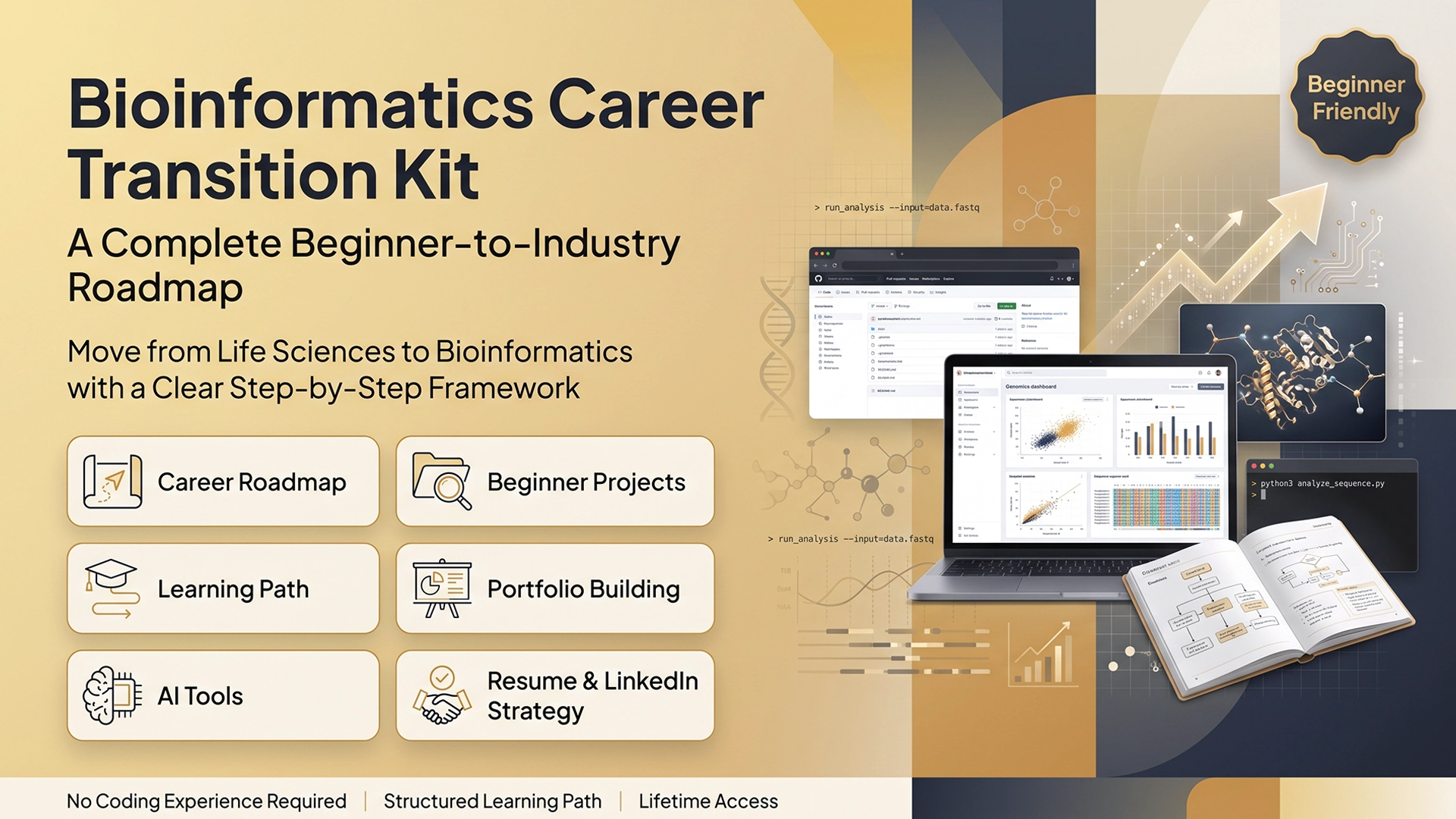
Skip the Confusion. Start Your Journey the Right Way.
Don't waste weeks on trial and error. Get the exact step-by-step guide to mastering the right tools and moving from total beginner to confident learner.
Get the "Python for Bioinfo Guide" Absolutely Free included with your order!
5. Systems Biology and Biotechnology (Mount Sinai)
What it is: Scaling up a bioprocess requires deep computational modeling. This course teaches you how to mathematically model complex cellular networks to predict how a microbe will behave inside a massive bioreactor.
Beginner Project Idea (The Metabolic Bottleneck Diagram): Use a pathway drawing tool to visualize a metabolic bottleneck during fermentation. Export as a crisp 16:9 visual and document how systems biology helps engineers bypass this issue.

Recruiters Decide Faster Than You Think.
Your resume, LinkedIn profile, projects, and certifications may be stronger than you realize. The real question is whether they are communicating the right message.
Questions? Reach us directly at connect@btgenz.in
The 10 Question Industrial Biotechnology Reality Check
When we evaluate resumes at BTGenZ, the students who have verifiable training in biomanufacturing workflows immediately bypass the generic applications. But once you sit down with a hiring manager, they will test if you actually understand the pipelines. Figure out the answers to these trap questions before your interview:
- Bioreactor Engineering: What is the fundamental engineering difference between a batch fermentation process and a continuous fermentation process?
- Oxygen Transfer: How do bioprocess engineers optimize the oxygen transfer rate when scaling up a highly aerobic microbial culture?
- Product Recovery: Why is downstream processing often the most expensive phase of industrial biomanufacturing?
- Metabolic Engineering: What is the biological function of a microbial cell factory and how do we computationally optimize its metabolic yield?
- Alternative Proteins: How does precision fermentation differ from traditional brewing when producing novel alternative proteins?
- Scale Up Challenges: When transitioning from a small laboratory flask to a massive commercial bioreactor, why do mass balance and heat generation become critical engineering challenges?
- Process Control: What specific parameters must be continuously monitored and controlled to maintain a stable environment inside an industrial fermenter?
- Sustainable Chemistry: How are engineered enzymes applied in industrial biotechnology to reduce the environmental footprint of chemical manufacturing?
- Quality Control: Why is maintaining strict sterilization protocols absolutely mandatory during upstream bioprocessing?
- The Reality Test: A lab manager asks: "Our engineered bacterial strain produces a massive amount of the target protein, but it forms insoluble inclusion bodies." How would you adjust the downstream processing pipeline to recover the active product?
Get the "Python for Bioinfo Guide" Absolutely Free included with your order!
Your Technical Skills Deserve to be Seen
I know exactly how frustrating it is to spend months mastering microbiology and cellular pathways, only to send out dozens of applications and hear absolutely nothing back. The reality is that just listing laboratory skills on a generic text heavy resume no longer works. Recruiters are overwhelmed. If your engineering depth is buried under basic formatting, you remain completely invisible.
You have to show them what you can do. Building a clean visual project or documenting a scale-up pipeline online proves to a hiring manager that you can actually execute the work. If you need help figuring out exactly what steps to take next, I highly recommend downloading our complete Biotechnology Roadmap over at guide.btgenz.in. It is available immediately and gives you a clear direction to start building your visibility.
However, some of you might be tired of guessing and want expert help turning your academic background into a selection-ready profile. We can absolutely work together directly to make that happen. Because rewriting your career narrative and building a custom digital portfolio requires hours of dedicated one-on-one strategy, this is a paid career positioning service. It is built specifically for students and researchers who value their time, want to skip the trial and error, and are ready to invest in their next big career leap.
If you are ready to let us do the heavy lifting with you and build a standout profile that attracts real industry opportunities, you can book your repositioning service directly at portfolio.btgenz.in. You can also drop an email to connect@btgenz.in if you want to chat about your specific situation before making a decision.
Do not let your hard work stay hidden. Start building your proof today.
Stay curious,
Looking for more resources? If you want to download project-related guidance, Click here to download.
Get the "Python for Bioinfo Guide" Absolutely Free included with your order!
Researchers Read:
Founder of BTGenZ. Passionate about simplifying biotechnology for the next generation and bridging the information gap for aspiring biotechnologists in India.

Related Reads
Loading commenting section...
Comments Section
No approved comments yet. Be the first to leave a comment!