Top 3 FREE Biomedical Imaging Courses for Bioinformatics

Career Advice 2026
3 Bioinformatics Certifications for Students Interested in Biomedical Imaging and Image Analysis
When most students think about bioinformatics, they think entirely in terms of sequences. They focus all their energy on processing A, C, T, and G alignments or mapping massive protein structures.
But there is another massive data format completely taking over the life sciences right now.
Pixels.
From classifying histology slides to detecting tumors in MRI scans, modern diagnostics rely heavily on AI-assisted medical imaging. Biological images are no longer just pictures doctors look at on a light box. They are massive mathematical arrays waiting to be computationally analyzed.
If you are a bioinformatics student, learning how to process image data is one of the smartest ways to expand your technical value. The industry needs researchers who understand how to extract quantitative features from medical images and train machine learning models to assist in clinical diagnostics.
When we review profiles at BTGenZ, the students who stand out the most are the ones who show versatility. By adding image processing to your digital portfolio, you prove you can handle complex, multimodal datasets. To help you build that specific skill, here are 3 highly rated training paths from top institutions. I have also included a specific portfolio project for each one to help you build verifiable digital proof.
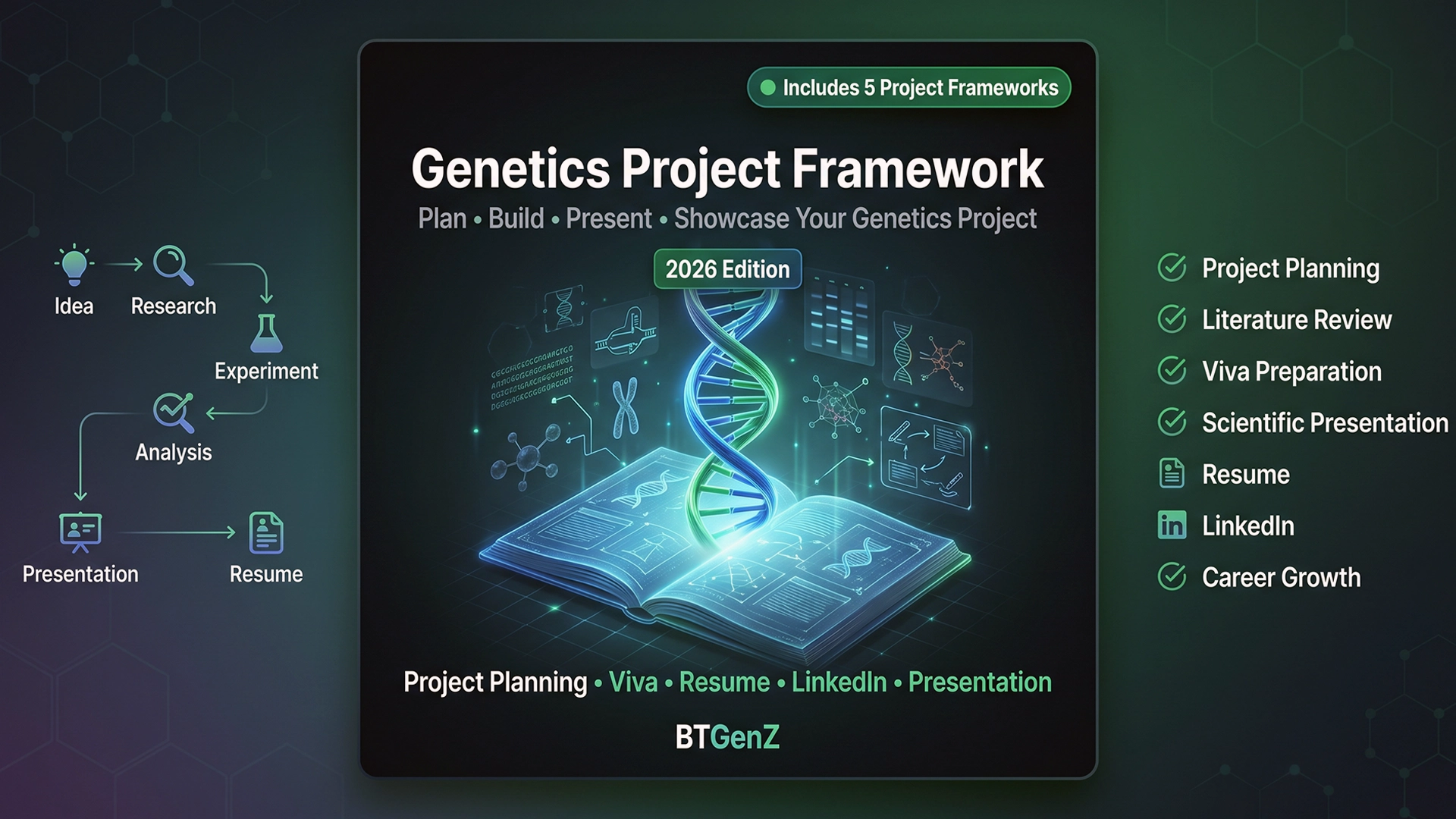
Build Your Genetics Project With Confidence.
Stop struggling with documentation and planning. Get the structured 2026 framework to plan, execute, and present your genetics project like a professional.
1. Fundamentals of Biomedical Imaging I - EPFL
What it is: Before you can computationally analyze an image, you must understand how it is physically generated. This course provides a deep dive into the mathematical and biological principles behind modern imaging modalities, giving you the foundation required to understand raw medical data.
Beginner Project Idea (The Modality Matrix): Create a clean, visually appealing PDF outlining the clinical differences between an MRI, a CT scan, and a PET scan. Detail what specific biological tissues each modality is best at visualizing. Export this strictly as a 16:9 visual for your digital portfolio to prove you understand the clinical foundation of your data.
Get the "Python for Bioinfo Guide" Absolutely Free included with your order today!

Stop Guessing. Get Job-Ready in 90 Days.
Tired of random tutorials and useless certificates? Get the exact step-by-step framework to master the tools employers actually want in the correct order.
2. Image and Video Processing: From Mars to Hollywood with a Stop at the Hospital - Duke University
What it is: This is where you learn the foundational mathematics of image manipulation. You will learn the exact computational techniques used to process images, enhance raw visuals, and extract quantitative data.
Beginner Project Idea (The Segmentation Visualizer): Download a raw fluorescent microscopy image of cultured cells. Use an open-source tool like ImageJ or write a simple Python script to computationally segment and count the individual cell nuclei. Export a crisp 16:9 before and after screenshot to prove you can extract quantitative data from visual inputs.

Bioinformatics Project Guide
Stop wondering what to build. Get 5 resume-ready bioinformatics projects with curated datasets, recommended tools, GitHub structure, and clear implementation workflows.
Get the "Python for Bioinfo Guide" Absolutely Free included with your order today!
3. AI for Medical Diagnosis - DeepLearning.AI
What it is: This takes your skills to the cutting edge. You will learn how to build and train deep learning models, specifically Convolutional Neural Networks, to computationally classify diseases directly from medical images.
Beginner Project Idea (The Diagnostic AI Flowchart): Open Draw.io and map out the entire computational workflow required to train a diagnostic image classifier, from raw DICOM file ingestion to data augmentation and model deployment. Export it horizontally as a clean 16:9 visual and share it on LinkedIn to show recruiters you understand the architecture of AI in healthcare.
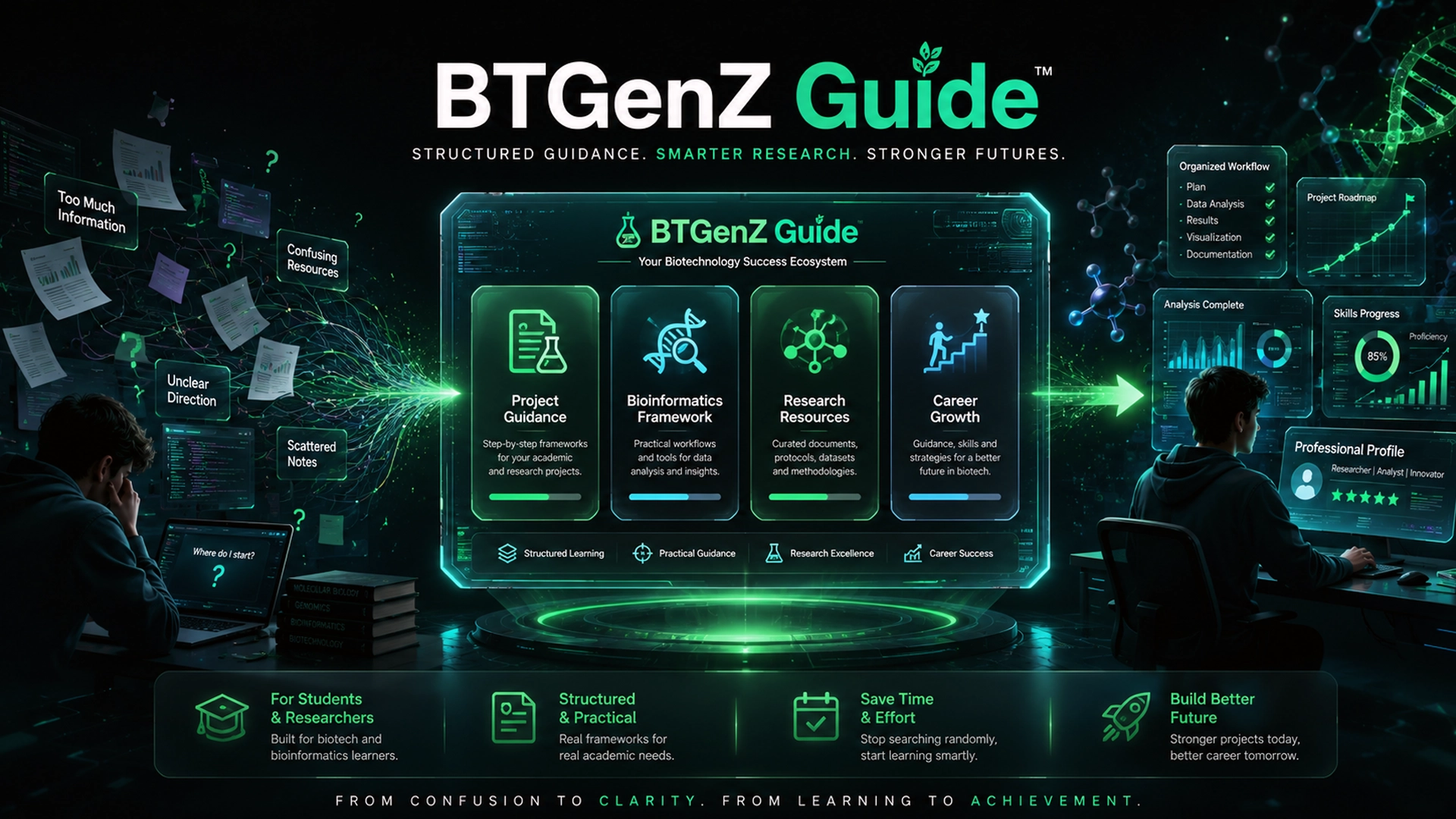
Find Your Next Step in Bioinformatics.
Confused about where to start or what to learn next? Browse our curated collection of guides, roadmaps, and tools designed to take you from beginner to job-ready.
The 10 Question Biomedical Imaging Reality Check
When we evaluate resumes at BTGenZ, the students who have verifiable training in image processing immediately bypass the generic biology applications. But once you sit down with a hiring manager, they will test if you actually ran the models. Figure out the answers to these trap questions before your interview:
- Data Structure: How do you computationally represent a biomedical image as a numerical array for machine learning models?
- Analytical Output: What is the fundamental difference between image classification and image segmentation in clinical diagnostics?
- Network Architecture: Why is a Convolutional Neural Network specifically preferred over standard artificial neural networks for analyzing histological slides?
- Dataset Limitations: How does data augmentation prevent a deep learning model from overfitting when working with a highly limited dataset of MRI scans?
- Image Processing: What is the biological and computational purpose of applying a thresholding algorithm to a fluorescent microscopy image?
- Feature Extraction: How do computational tools extract quantitative features like cell shape, volume, or texture from a raw ultrasound image?
- Image Alignment: Why is image registration absolutely critical when computationally comparing a patient CT scan taken before and after a surgical intervention?
- Clinical Standards: What is the DICOM standard and why is it mandatory for storing and transmitting clinical imaging data across hospital networks?
- Model Training: How does transfer learning allow bioinformaticians to train highly accurate diagnostic models without needing millions of medical images from scratch?
- The Reality Test: A lab manager asks: "Our AI model predicts cancer perfectly on our hospital data, but fails on data from a different hospital." How do scanner hardware variations and image normalization explain this computational issue?
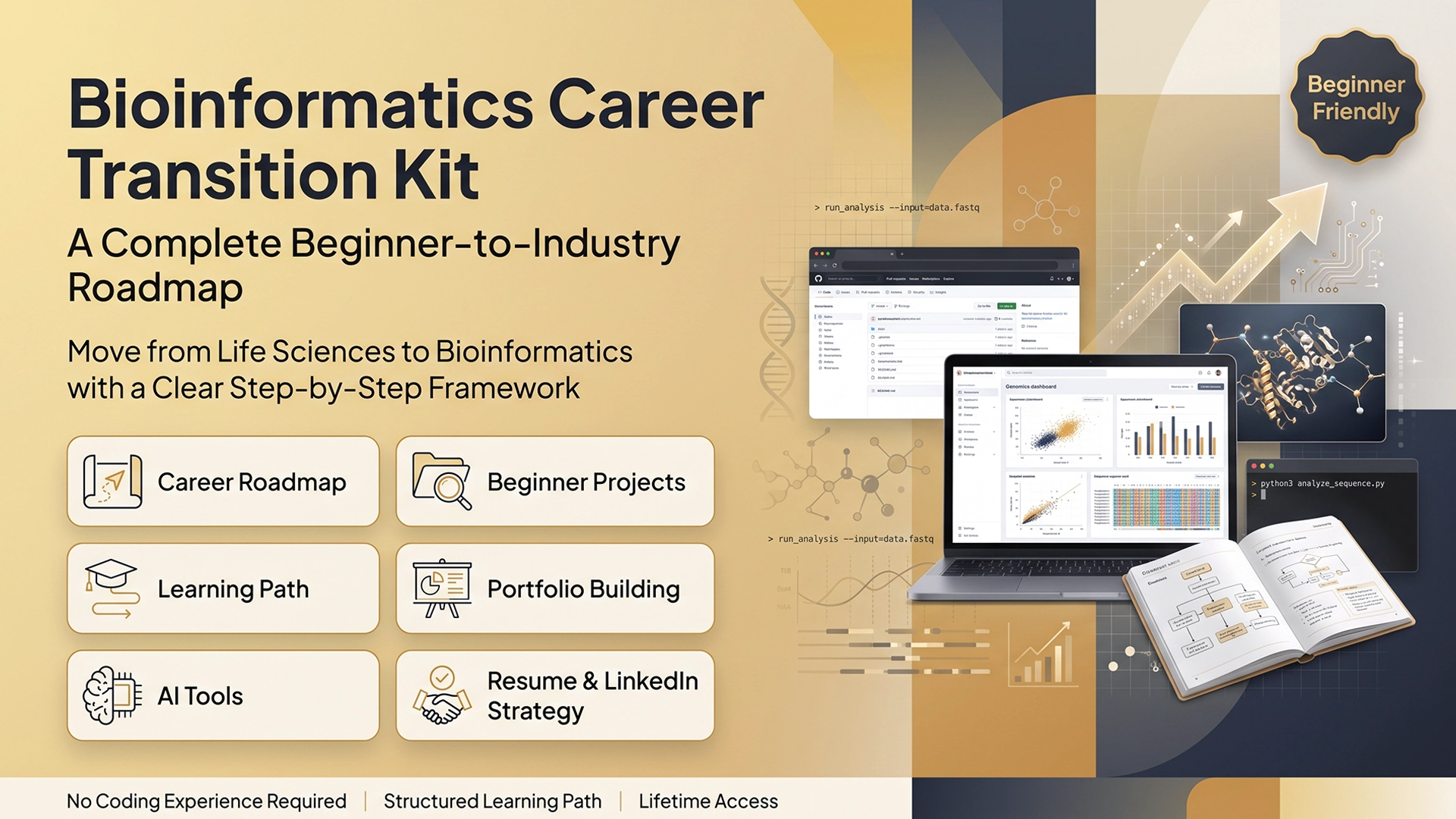
Skip the Confusion. Start Your Journey the Right Way.
Don't waste weeks on trial and error. Get the exact step-by-step guide to mastering the right tools and moving from total beginner to confident learner.
Get the "Python for Bioinfo Guide" Absolutely Free included with your order!
Your Technical Skills Deserve to be Seen
Expanding your bioinformatics toolkit into image analysis is a massive advantage, but only if recruiters actually know you can do it. The reality is that just listing tools like OpenCV or TensorFlow on a generic text resume is not enough. You have to show them what you can do. Building a clean visual project or documenting an image segmentation script online proves to a hiring manager that you can actually execute the computational work.
If you need help figuring out exactly what steps to take next, I highly recommend downloading our complete Bioinformatics Roadmap over at guide.btgenz.in. It is available immediately and gives you a clear direction to start building your technical visibility without the guesswork.
Do not let your hard work stay hidden. Start building your proof today.
For guidance on your Portfolio and Project Showcase, visit portfolio.btgenz.in.
Looking for more resources? If you want to download project-related guidance, Click here to download.

Recruiters Decide Faster Than You Think.
Your resume, LinkedIn profile, projects, and certifications may be stronger than you realize. The real question is whether they are communicating the right message.
Questions? Reach us directly at connect@btgenz.in
Researchers Read:
Founder of BTGenZ. Passionate about simplifying biotechnology for the next generation and bridging the information gap for aspiring biotechnologists in India.

Related Reads
Loading commenting section...
Comments Section
No approved comments yet. Be the first to leave a comment!